Start Date: 2024
Summary
Project Team: Jarrett Byrnes, Daniel Lopez, Melba Torres-Sosa (UMass Boston) Katherine Dafforn (Stone Living Lab, UMass Boston)
The Stone Living Lab partnered with 2021 Earthshot Prize Finalist Living Seawalls and the City of Boston to install the first-ever Living Seawalls in the United States, expanding a global network of Living Seawalls across coastal urban ecosystems. This pilot represents the first installation of these panels in a coastal environment that experiences freezing and ice scour.
We aim to examine whether the use of modular Living Seawalls panels chosen to reflect key microhabitats typically found in a New England rocky intertidal support different community structure in comparison to typical vertical seawalls. Each new location provides a new set of environmental conditions such as temperature, salinity, and flow, expanding the settings in which these solutions are tested.
Background
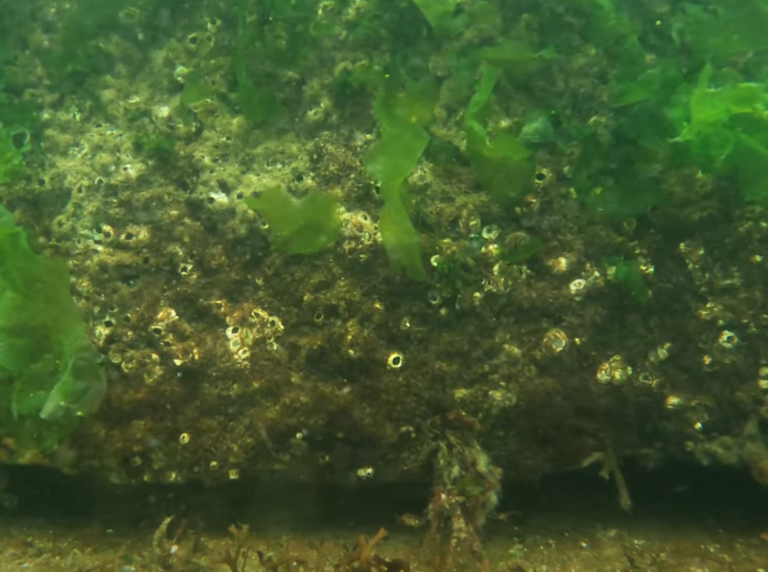
Seawalls were engineered as essential defense structures to protect coastal communities from erosion and sudden storm surges. As a result, these hardened coastlines have become less habitable for native marine life. These barriers have unintended ecological consequences, replacing complex, sloping, and diverse habitat types with flat, featureless, and vertical structures. This drastic loss of habitat results in a loss of biodiversity and ecosystem function.
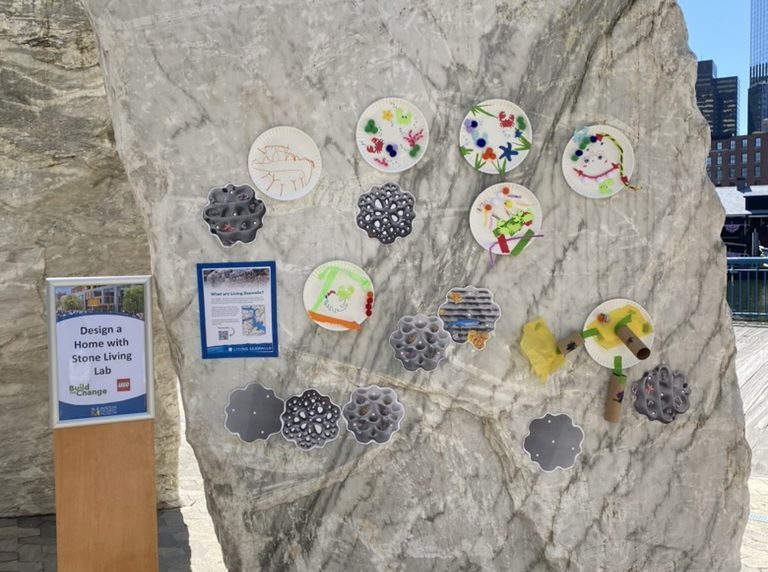
Started in Sydney, Australia, Living Seawalls is a nature-based solution to urban shorelines. Building on more than 20 years of research and using 3D printing technology, they have developed modular habitat panels that mimic natural features to help marine life thrive. In Boston Harbor, the Living Seawalls project sites incorporate critical features typically found in rocky intertidal zones such as crevices and water-retaining structures which marine organisms rely on to survive the harsh conditions of the region. These panels are affixed onto existing seawalls to provide additional habitat and support native flora and fauna along these hardscapes.
Research Objectives
The primary objective of the Living Seawalls pilot is to evaluate the effectiveness of these panels as an ecological enhancement to traditional coastal infrastructure in Boston Harbor. We aim to understand how feature provisioning such as rock pools, crevices, and shaded areas influence species recruitment and community composition in comparison to traditional seawalls. We are also interested in understanding the performance of the panels under seasonal freeze and thaw cycles.
Schedule
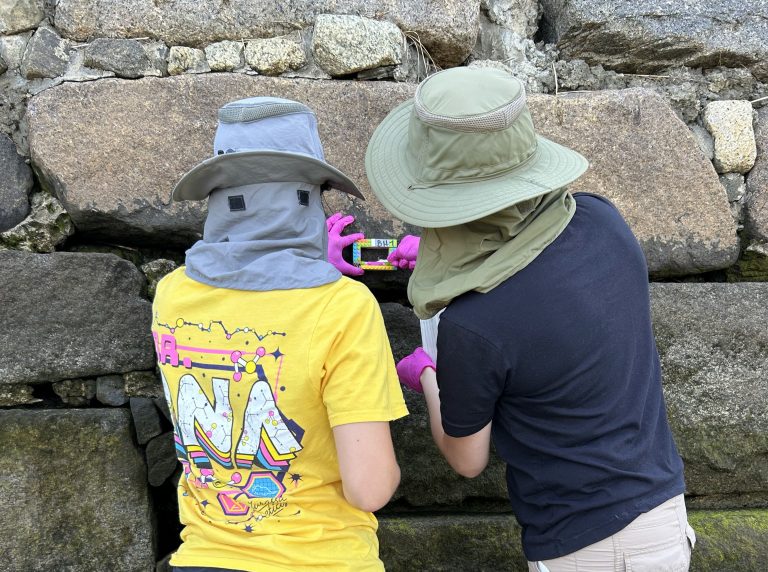
Summer 2023 & Summer 2024 – Background sampling
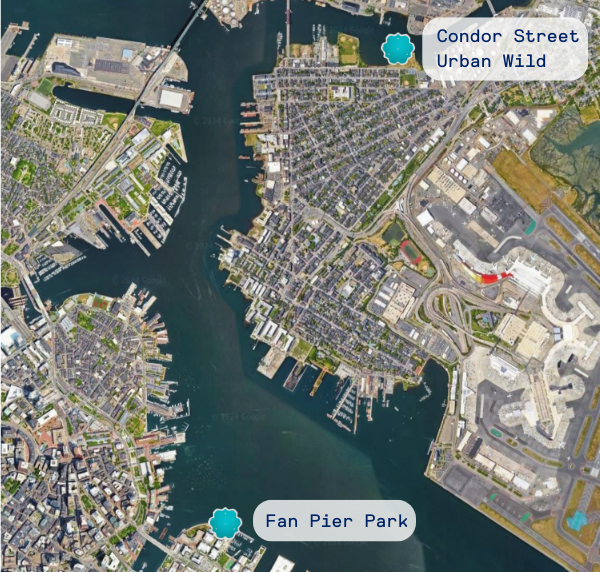
November 2024 – Living Seawalls Installed at Condor Street Urban Wild and Fan Pier
November 2024 – Initial Macroflora and fauna, and Microbial Sampling
Ongoing – Seasonal sampling