From financing resilience to healthy harbors: Reflections on two conversations about coastal resilience
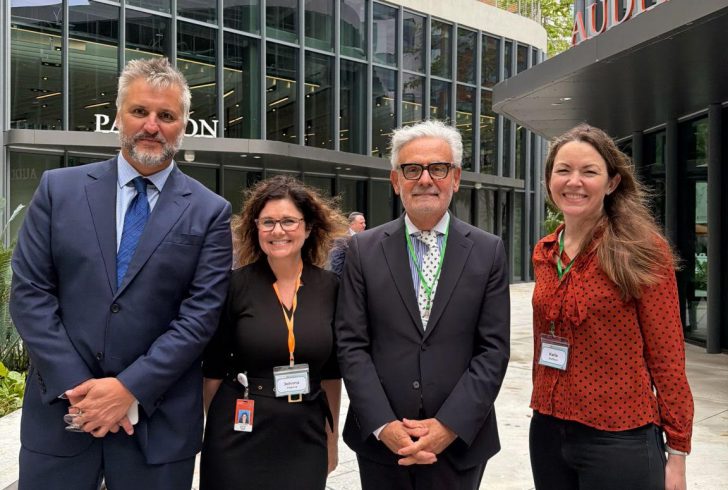
By Katie Dafforn
In March, I had the opportunity to participate in two convenings focused on coastal health and resilience: Resilience 365 in Miami and the Great Harbor Yacht Club Foundation Symposium on Nantucket. While very different in scale and format, together they offered complementary perspectives on how resilience is financed, designed, monitored, and sustained over time.
Resilience 365, Miami
The first day of Resilience 365 included talks about the challenge and opportunity of financing resilience at scale. One recurring theme was the need to engage with the private sector. Speakers highlighted the power of bringing agriculture, energy, insurance, and finance into the same room and asking them to plan collaboratively. They emphasized the importance of engaging as partners to unlock resources more quickly and help ensure that resilience investments persist long after philanthropic or research funding cycles move on.
Several speakers described the rapid evolution of financial instruments designed to support restoration and adaptation, from blue and green bonds to emerging “resilience bonds.” These tools have already been used to support ocean restoration, timberland management, and wildfire recovery, creating market-rate returns for investors while also reducing real-world risk. Yet resilience benefits are diffuse and difficult to value, e.g. the value of a restored wetland or mangrove forest doesn’t flow neatly back to a single investor. Thus, speakers called for greater investment in quantifying resilience benefits and at multiple time and spatial scales.
That conversation became especially concrete in discussions about time horizons. Infrastructure often lasts 30–75 years, yet municipal debt cycles rarely exceed 20–40. This mismatch makes it difficult to close the gap between long-term resilience value and short-term financing constraints. Tools such as improved risk disclosure, lifecycle costing, and the pricing of physical climate risk into transactions were highlighted as essential steps toward aligning finance with reality.
Professor Mike Beck spoke about how to account for the risk of habitat loss alongside climate change impacts in resilience planning with tools such as adaptation credits. By translating the protective benefits of ecosystems, such as salt marshes or mangroves, into measurable reductions in flood risk, these credits offer a standardized way to value restoration as infrastructure. Using peer-reviewed science and accounting frameworks, projects can calculate how much risk reduction a restored habitat provides and express that benefit in financial terms. While these credits are not yet traded at scale, Professor Beck spoke about early pilot sites and open-source tools, such as global mangrove resilience calculators, that are laying the groundwork for broader adoption.

On the second day of Resilience 365, I participated in a panel focused on rethinking the future of marine infrastructure. Sonia Chao (University of Miami) moderated the panel and opened the discussion by drawing insights from her newly released book ‘Calibrating Coastal Resilience’, which examines how architecture, landscape and environmental systems can be re-imagined in an era of chronic climate stress. She described the “urban terroir” framework for climate adaptation in coastal cities and how data-driven analysis can be blended with cultural and historical contexts to identify and align preservation goals with resilience needs.
I added to the conversation by highlighting how the urban ocean is experiencing a housing crisis and describing how ecological goals can be aligned with resilience. Over decades, human-built infrastructure such as piers, seawalls, and bulkheads, has replaced vast areas of natural habitat. These structures do more than occupy space; they actively modify environmental conditions, altering light, water flow, temperature, chemistry, and patterns of biological settlement. Using the Living Seawalls and Stone Living Lab as examples, I described how infrastructure design decisions determine which species can persist, which ecosystem services are supported, and how people connect to blue spaces.
Andrew Baker (University of Miami) extended this idea by focusing on coral reefs as infrastructure. Drawing on research underway at the University of Miami, Andrew described how living reefs provide measurable protective services, including wave attenuation and shoreline stabilization, while simultaneously supporting biodiversity and fisheries. He emphasized that coral systems are dynamic structures whose performance depends on water quality, temperature, and management decisions. By treating corals as functioning infrastructure, rather than simply habitat for conservation, he emphasised that reef restoration could be integrated directly into coastal protection strategies.
Illya Azaroff (The American Institute of Architects) brought an architect’s perspective, highlighting how to translate ecological knowledge into the language of design standards and building performance, particularly to advance disaster risk reduction. He emphasized the responsibility and opportunity for the design profession to work across disciplines, ensuring that infrastructure responds not only to projected sea-level rise or storm surge, but also to local environmental conditions and community needs.
Great Harbor Yacht Club Foundation Symposium, Nantucket
While Miami focused on large-scale systems and financial innovation, Nantucket was about continuity, collaboration, and place-based care.
Built and natural infrastructure discussions emphasized Nantucket Harbor as an interconnected system shaped by moorings, stormwater, and habitat conditions. Speakers highlighted the ongoing transition toward eelgrass-friendly moorings, including plans to pilot up to 25 eco-moorings by 2026. Efforts to replace traditional mushroom anchors with designs such as pyramid or helical systems aim to reduce seabed scouring while balancing operational realities, including the active scallop fishery and the risk of gear entanglement. This work reflects the broader challenge of adapting infrastructure that must function historically, ecologically, and economically at once.
Stormwater emerged as another critical interface between built systems and ecosystem health. Town staff and partners described extensive monitoring from outfall pipes, including flow meters, composite sampling, and nutrient tracking, with particular concern for areas such as pump stations with tide gates, and constructed wetlands. Several speakers emphasized that decades of data point toward a clear conclusion: stormwater discharges are a primary driver of nutrient loading on Nantucket, and resilience will require reducing or eliminating direct discharge into the harbor through sewering, green infrastructure, and regulatory reform.
The health of coastal ecosystems and communities featured prominently. Summer health assessments in Nantucket Harbor documented temperature, dissolved oxygen, pH, salinity, nutrients, and chlorophyll at high temporal resolution. Data from buoys measured water temperatures consistently above ~23°C, conditions that can be stressful for both eelgrass and bay scallops. Parallel work by UMass Boston researchers is examining the impacts of microplastics in stormwater, sediments, and biota, including bay scallop larvae, with emerging efforts to identify hotspots and test removal strategies in rain gardens and soils.
Salt marsh monitoring programs were discussed, including pilot studies examining sediment transport, marsh migration, carbon budgets, oyster reef performance, and the role of crab herbivory in Spartina loss. Speakers noted that in some cases, crab activity oxygenates peat and prevents vegetation from re-establishing, potentially pushing marshes toward conversion into anoxic tidal flats. Long-term quadrats, LiDAR-derived 3D datasets, and modeling efforts were highlighted as essential monitoring tools for detecting early change.
An important feature of the Nantucket convening was its emphasis on data translation and governance. The Harbor Monitoring Consortium, water quality labs on the island, and publicly accessible platforms such as WQViewer were highlighted as bridges between science and decision-making. Speakers stressed that resilience here depends not only on collecting data, but on making it legible to regulators, residents, and elected officials, and on maintaining protocols that allow results to be compared over decades.
Equally important was the focus on people and pathways into stewardship. Youth engagement programs, from middle-school field trips and high-school vessel operations training to shellfish hatchery visits and harbor monitoring activities, were cited as foundational to long-term resilience. Organizations described efforts to inspire young residents through hands-on experience, STEAM festivals, environmental art residencies, and collaborative projects that connect science, culture, and place. Artists working with community members to interpret migratory bird patterns, changing shorelines, and native species offered a complementary mode of inquiry, one that values observation, storytelling, and reuse as tools for engagement.