Healthy Coastal Ecosystems: From Boston Harbor to Your Shores
By: Alexis McLean
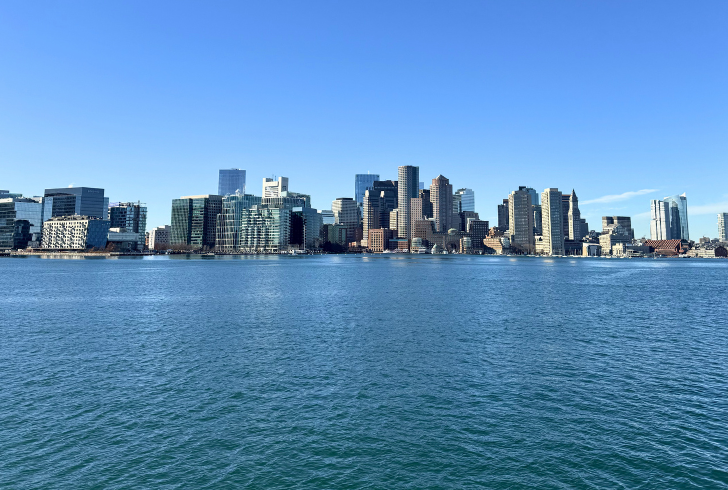
Here at the Stone Living Lab, our research focuses on where the land meets the sea. On these coasts, we live, play, work, and recharge. Since we most often interact with this part of the ocean, it is also most affected by human activity. From reduced biodiversity, to poor water quality, to sea level rise, urban harbors face a multitude of challenges which not only affect marine life, but also how we live. Our latest research projects explore ways we might be able to make our coasts more resilient by harnessing the benefits provided by life in the ocean and on land.
Testing Seaweeds for Climate Resilience
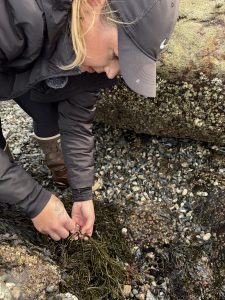 Seaweed plays a major role in the marine environment— from creating habitat, providing food, and absorbing and cycling carbon. These qualities that make seaweed a foundational species also make it an impactful climate solution.
Dr. Aly Putnam, Post-doctoral Research Associate at the Stone Living Lab has been sampling several species of canopy-forming seaweeds along the northeast coast to test how these species might tolerate shifts in ocean temperatures and other climate change impacts.
Assessing Salt Marsh Health to Inform Future Restoration
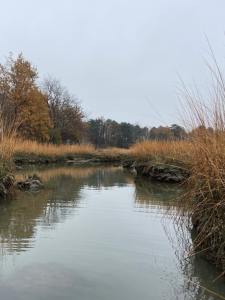 Salt marshes provide valuable habitat, play a critical role in the aquatic food web, and due to their ability to store floodwaters, protect shorelines and infrastructure from coastal flooding and storm surges.
Sea level rise and anthropogenic modification have resulted in the decline of salt marshes, especially in areas where a marsh is unable to migrate inland. Restoring these vital ecosystems is essential to sustain wildlife and protect our coasts.
The Lab recently shared a Salt Marsh Health Assessment report from work done on Cathleen Stone Island examining why a marsh was exhibiting signs of poor health. Findings from the assessment mark a first step in exploring ecological restoration strategies to improve the functioning of the marsh. One of the goals of this work is to better understand how hydrologic restrictions affect physical processes within the marsh and apply those insights to salt marshes around Boston. The Lab will build on this work by evaluating the health of a salt marsh at Condor Street Urban Wild in partnership with the City of Boston.
Bringing Life Back to the Harbor through Living Seawalls
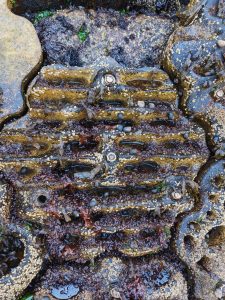 In areas where hardened infrastructure is essential to protect communities, retrofitting existing structures with the Living Seawalls habitat panels allows biodiversity to coexist with grey infrastructure. The summer marks the beginning of another field season where Lab researchers continue to monitor the intertidal species that make a home out of the Living Seawalls at Fan Pier and Condor Street Urban Wild.
Here in Boston, we’re collaborating with other organizations to explore what other co-benefits Living Seawalls might offer as a result of increased biodiversity, and to expand educational opportunities and resources so that more people can learn about Living Seawalls. Being a part of this network has also allowed us to collaborate with and learn from other Living Seawalls project teams. You can learn about Living Seawalls in Ireland from Dr. Louise Firth, Senior Lecturer at University College Cork in our Seminar Series this month!
How can nature-based approaches benefit oceans and people?
Coastal ecosystems provide a wide range of benefits to both aquatic and terrestrial life—including us—from supplying food and habitat to offering recreational opportunities and protecting communities from flooding. These research initiatives are all a first step in the protection, management and restoration of ecosystems and foundational species that help our ocean thrive. Ultimately, we hope that this work lays the foundation for local communities to implement nature-based approaches, so that we can continue to enjoy our favorite harbors, beaches, marshes, and other outdoor places that connect us to the ocean.