Highlights and Reflections from the 2026 AGU Ocean Sciences Meeting

Contributors: Rebecca Shoer, Emily Zlevor, Mark Borelli, Alexis McLean, Aimee Bonanno, Kayla Bradley
The Ocean Sciences Meeting (OSM) which took place from February 22- 27, 2026, brought together more than 6,000 ocean scientists and educators from around the world to share research, exchange ideas, and collaborate on advancing how we study and educate others about the world’s oceans.
SLL members attended a wide range of education and scientific presentations, ranging from storytelling and art-science partnerships to youth career development. Attendees also learned more about the wide range of research that falls under the umbrella of “ocean sciences:” chemical, geological, technological, biological, ecological. Rebecca Shoer, SLL Education and Engagement Program Manager said she was able to “connect with peers from across the country and the world, and re-charge my sense of purpose and hope for our global ocean.”
Several Stone Living Lab (SLL) researchers, students, and educators presented their work at this first OSM held internationally and with the largest attendance ever. Rebecca presented a poster about the SLL Summer Teacher Institute. Check out the posters presented by Lab staff and students at OSM:

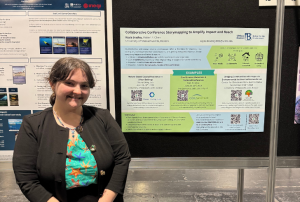
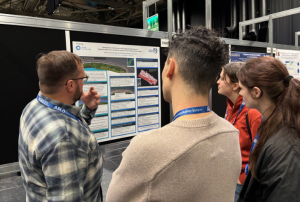
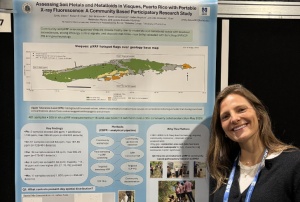
Top left: Rebecca Shoer with her poster on the Stone Living Lab’s Summer Teacher Institute; Top right: SLL Grad Student Kayla Bradley with their poster on Collaborative Conference Storymapping; Bottom left: SLL Field Project Manager Francesco Peri presenting his poster to OSM attendees; Bottom Right: SLL Grad Student Emily Zlevor with her poster on community-based participatory research.
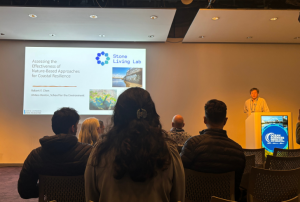
SLL Researcher Bob Chen giving a presentation on Stone Living Lab projects.
Something that caught everyone’s eye was the use of space and technology in one of the sessions. “There is always a conflict between the size of the room (and available seats) for talks versus the expected audience” said Mark, “sometimes you have a cavernous room with 100s of seats and 40 people show up or you have 60 chairs and the room is full and people are standing in the back”. At this conference, there was a large area with 7-8 screens, all color-coded, and a table behind the back row of seats with similarly color-coded headphones! This allowed for many presentations in one space without sound interference.

OSM conference space with color-coded headphones and screens for hosting multiple talks simultaneously.
Aimee Bonanno gave her presentation ‘Training a New Generation of Ocean Innovators: the Bridge to Bluetech Internship Program’ in this innovative use of space. “I was skeptical at first and a bit apprehensive but the presentation and Q&A went flawless and really allowed for a much larger audience,” said Aimee.
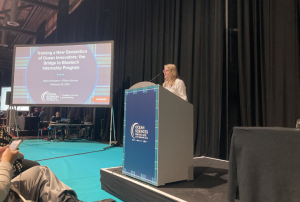
Aimee Bonanno presenting at OSM.
Overall, the 2026 OSM conference was a great opportunity to learn about other research, education and outreach programs worldwide. While attending conferences can be costly in time and expense, doing so can be such a valuable experience for a scientist, educator, or manager. Conducting research is important, as is publishing those results in peer-reviewed literature, but attending and presenting at these conferences, sharing your ideas, and hearing the ideas of others and having those conversations that can only happen in these settings is such a meaningful experience. These interactions push the field forward and reinvigorates those working in this field by adding the human dimension and collaboration to this important work that is invaluable and can be too easily missed.
All in attendance were focused and excited to share their love and passion for the global ocean. There is so much to learn in these spaces and it is exciting how many scientists are passionate about teaching and empowering local ocean stewards. There is still so much work to be done, especially in uplifting communities and countries not represented by the 6,500 folks at the conference this year.