How sponge cities offer a sustainable solution to rising sea levels | WBUR
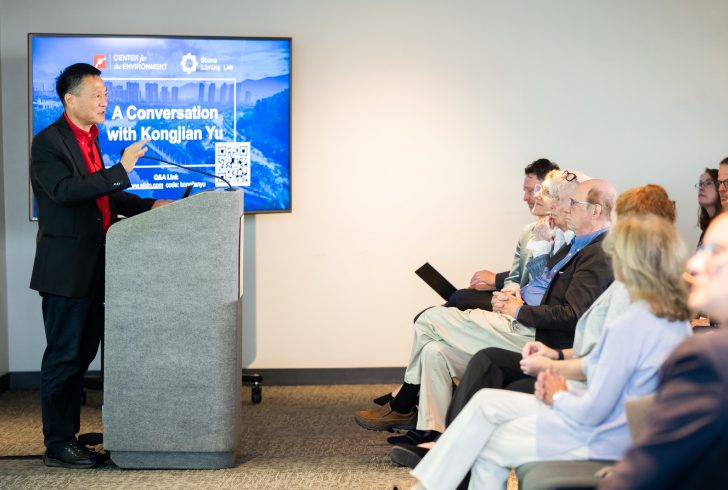
Read or listen to WBUR's coverage of Professor Kongjian Yu's visit to Boston to learn about his visit with Stone Living Lab staff.
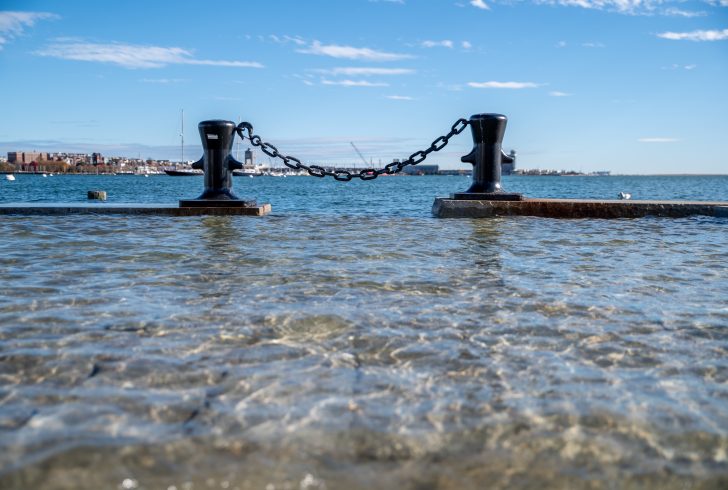
Read about observations from real-time monitoring in Boston Harbor and community impacts from local media coverage during the February 2026 Nor'easter in this new StoryMap developed by the Lab.
Read or listen to WBUR's coverage of Professor Kongjian Yu's visit to Boston to learn about his visit with Stone Living Lab staff.
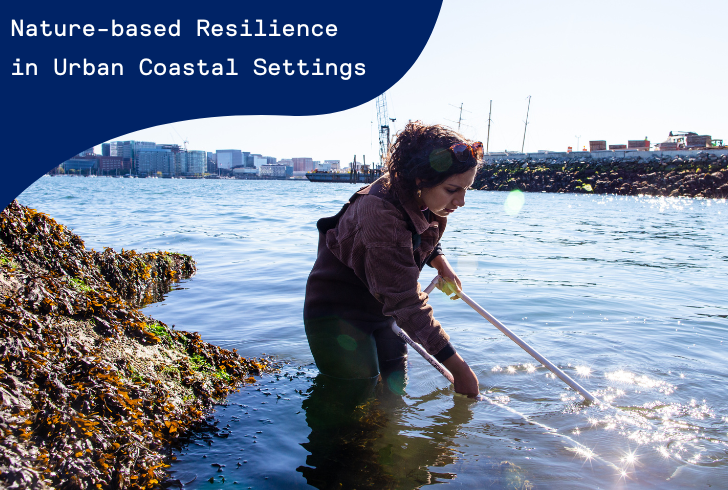
We are now accepting abstracts for our 2025 conference: Nature-based Resilience in Urban Coastal Settings!
Reflections on our Wicked High Tide program from our Education and Engagement Program Manager.
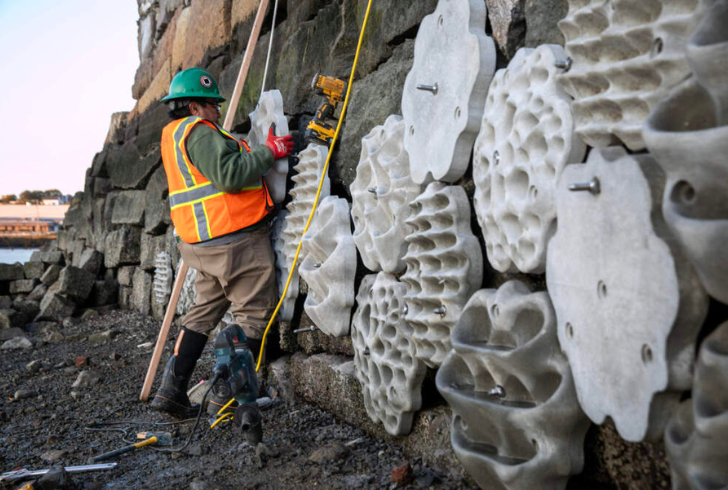
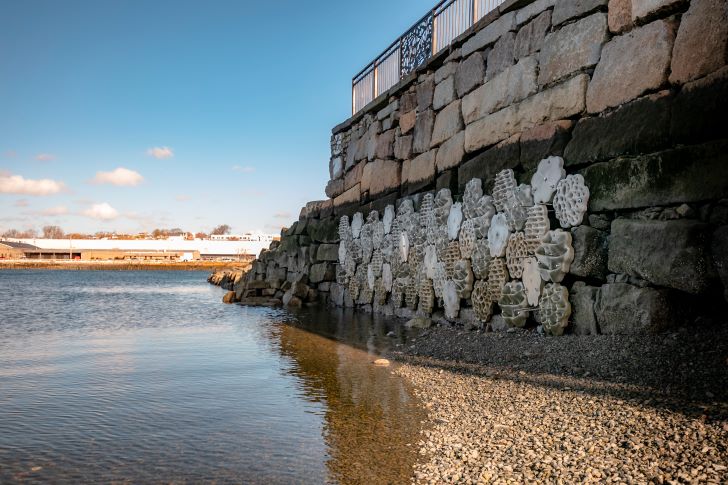
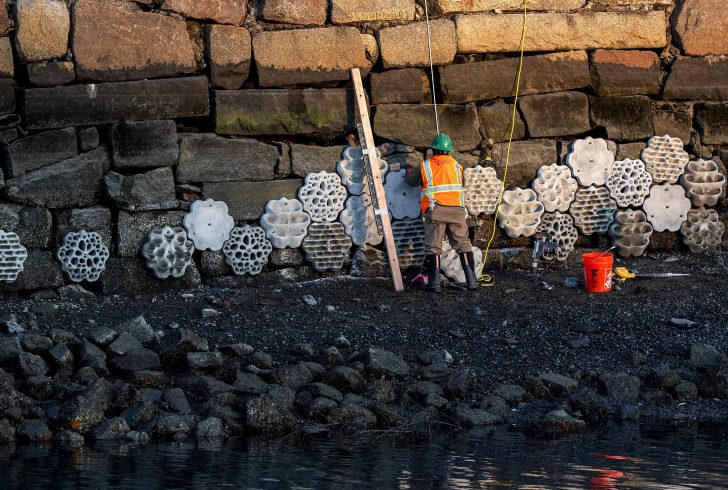
North America’s first-ever “Living Seawalls” panels were installed by the Stone Living Lab at two locations on Boston Harbor this month. The panels are specially designed to create habitat for marine life to flourish on what would otherwise be inhospitable flood barriers.
The Lab's pilot Living Seawalls project, Managing Director Joe Christo, and UMass Boston researcher Jarrett Byrnes are featured by WBUR, highlighting how new engineering designs can help "green the gray" along Boston's shoreline.
The Lab’s pilot Living Seawalls project, Managing Director Joe Christo, and UMass Boston researcher Jarrett Byrnes are featured by the Boston Globe, highlighting the site in East Boston and some of the residents already calling the spot home.
Professor Kongjian Yu enjoyed a warm welcome on a two-day visit to Boston to share his “sponge city” vision for climate resiliency.
Coastal flooding this month brought renewed attention to Boston's vulnerability to high tides, and several news outlets featured the Lab's outreach efforts!
Reflections on a summer spent working with and educating the next generation!